












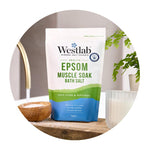



Epsom vs Magnesium
Discover the best bath salt for your next restorative soak

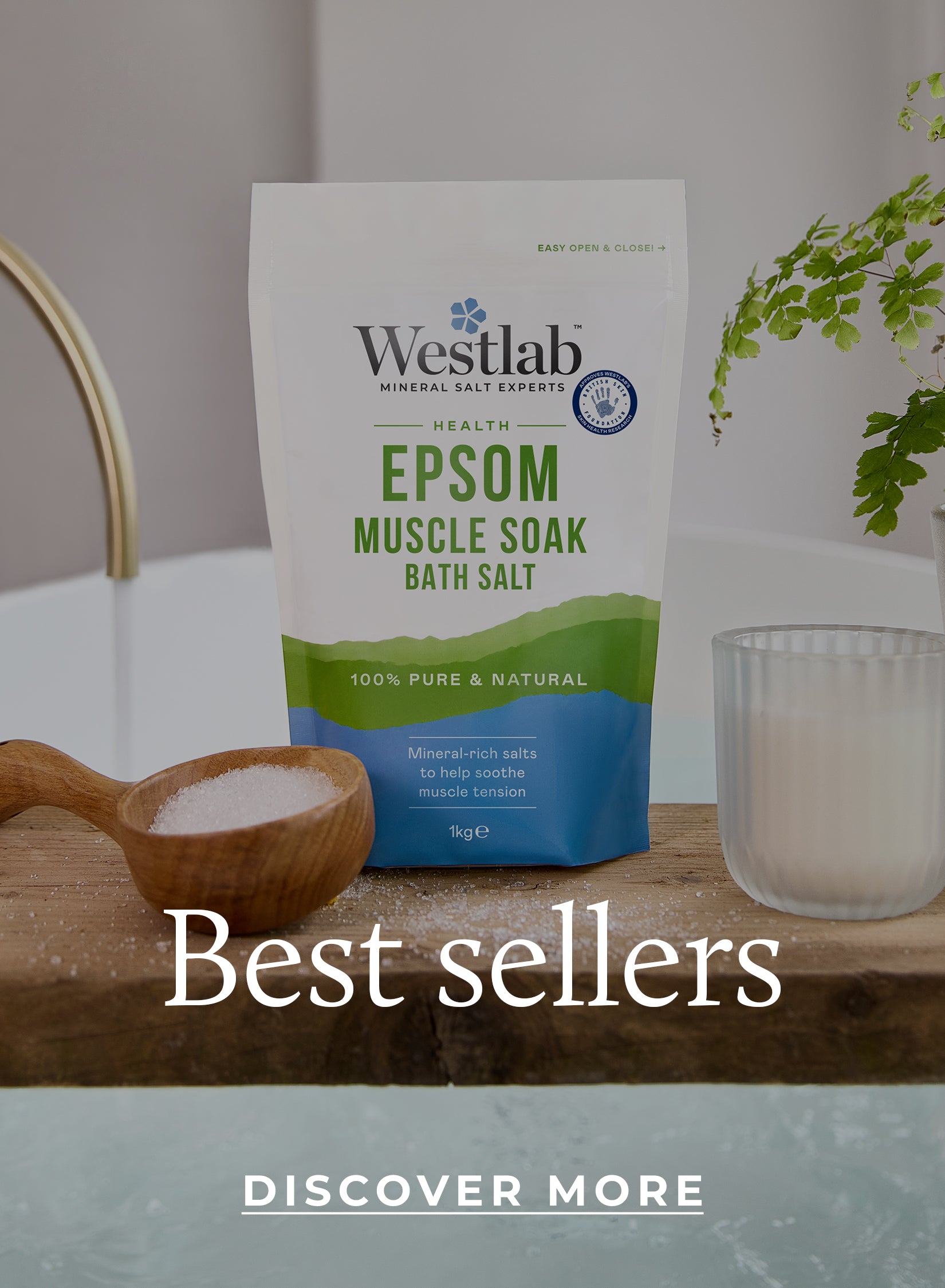
Epsom Bath Salts
The complete guide to Epsom salt: what it is, how it works and how to use it

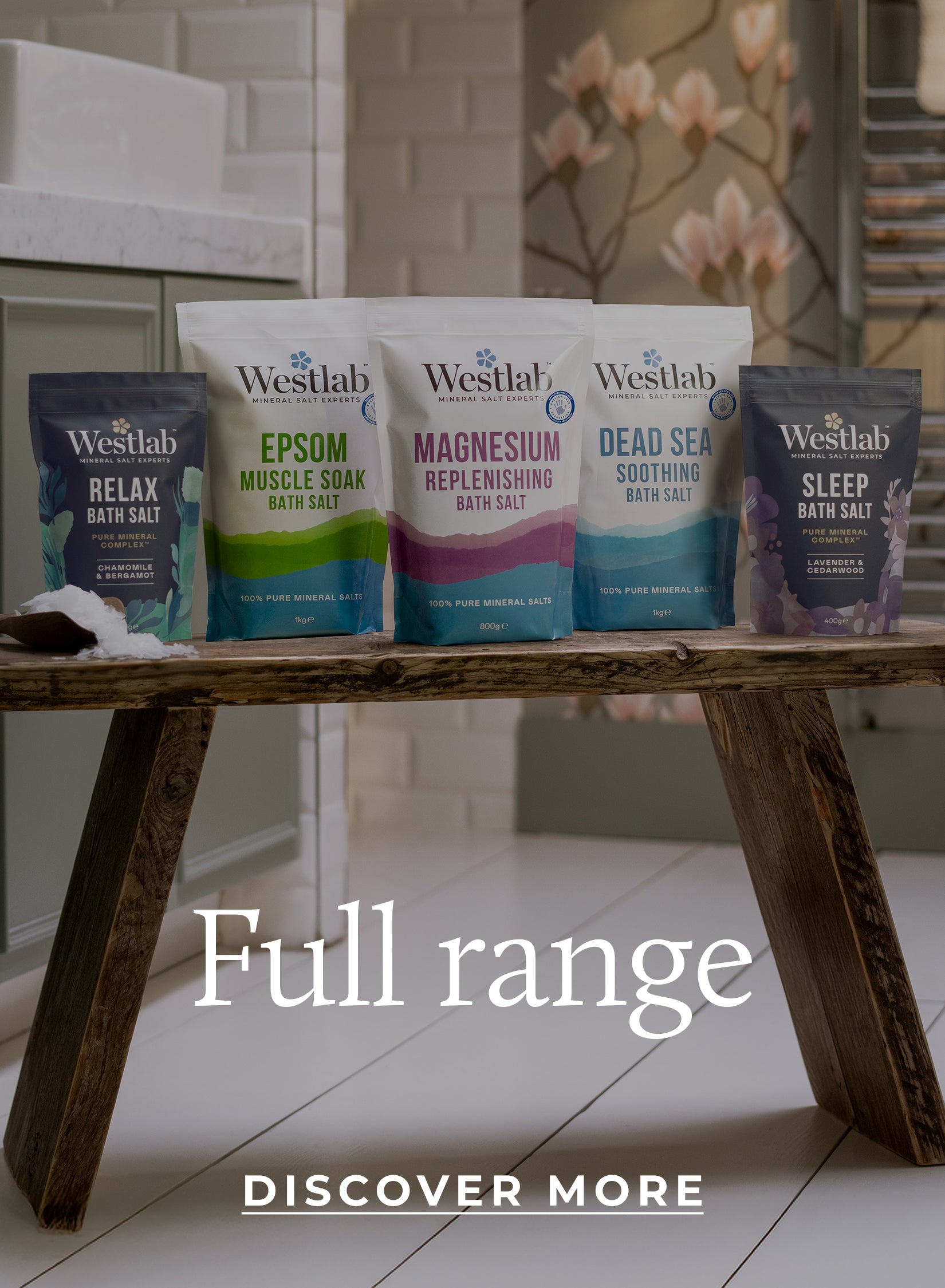
Magnesium Bath Salts
The complete guide to magnesium flakes: what they are, how they work and how to use them

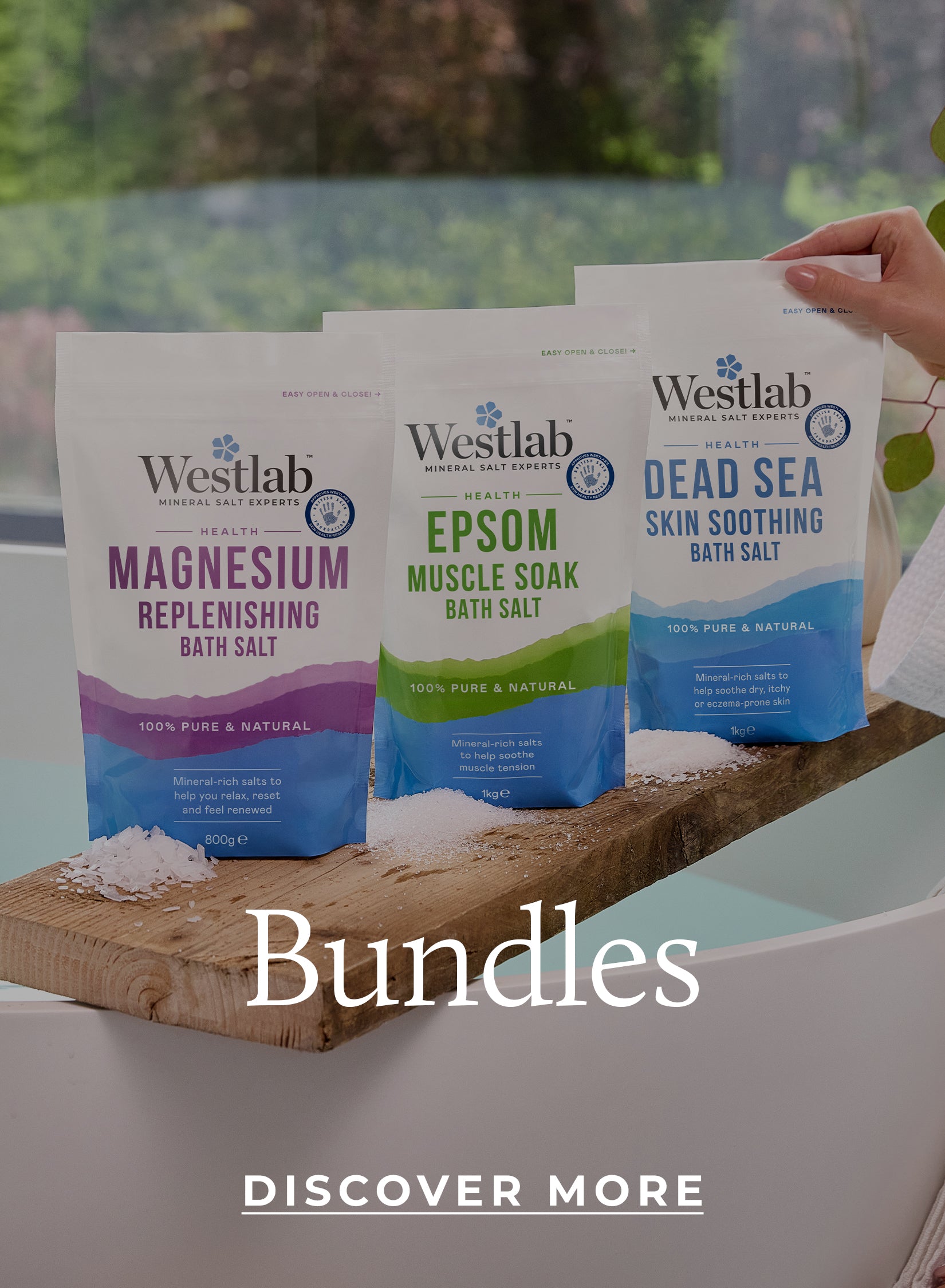
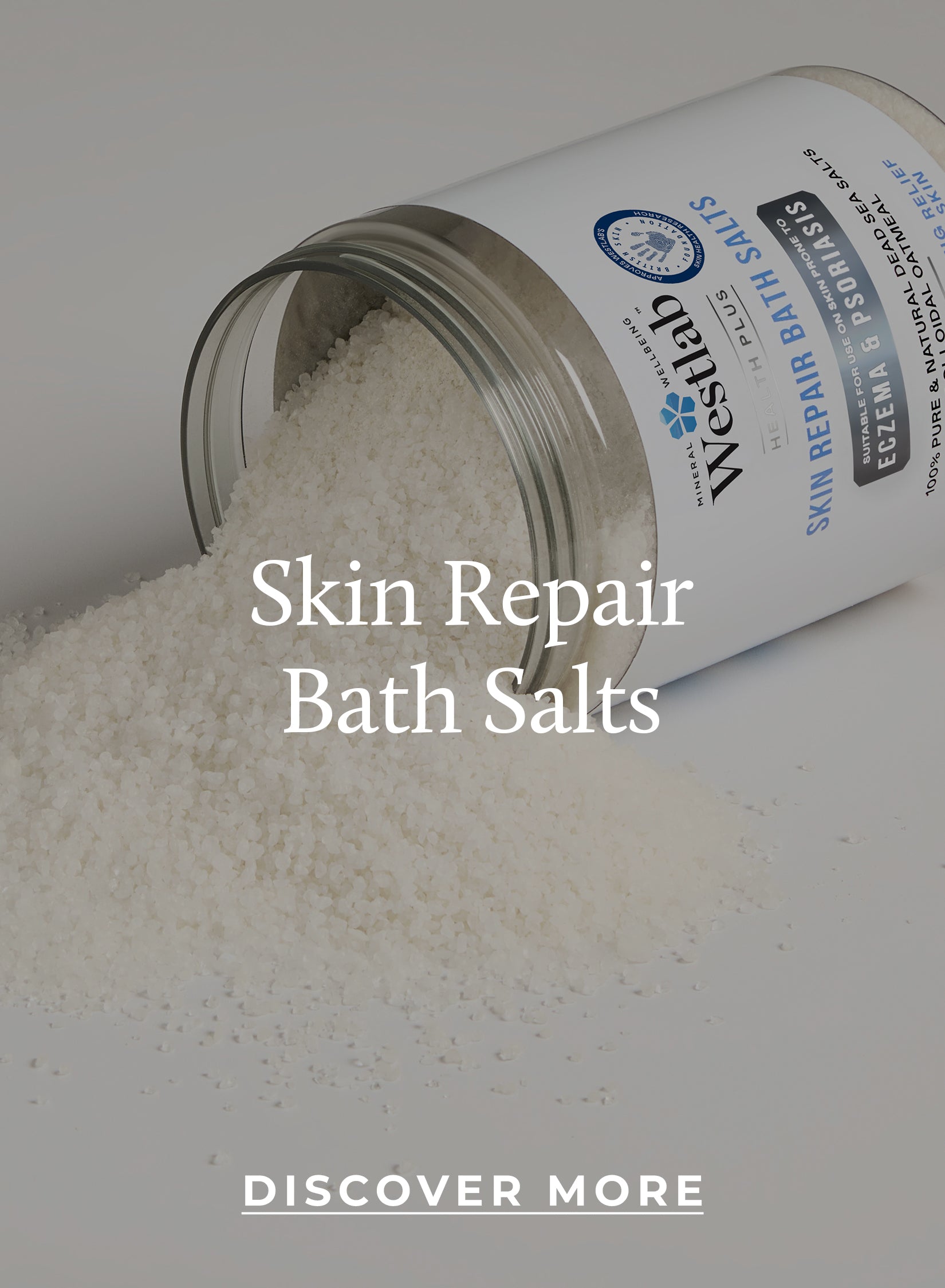
Dead Sea Bath Salts
The complete guide to Dead Sea salt: what it is, how it works and how to use it

Shop on Amazon
Shop all your Westlab favourites and discover your next mineral moment on Amazon

Dead Sea

Whether you’re seeking smooth, hydrated skin or respite from aching muscles, using the right mineral-rich bath salts can elevate bathing from simple relaxation to essential restoration.
So let’s explore two ancient salts, from their sources to the science, and how they could help you recover, rebalance and return to you.
Epsom salt or Dead Sea salt: what's the difference?
While Epsom salts and Dead Sea salts might look similar, their chemical makeup is completely different.
Epsom salt, also known as magnesium sulphate heptahydrate (MgSO4·7H2O for any chemists out there) is a mineral compound made up of magnesium, oxygen, sulphur and water. Dead Sea salt, sometimes called Maris Sal, is a rich, complex blend of over 20 minerals, including magnesium, potassium, calcium, bromide and sodium.
So which mineral salts should you choose? In short, it depends.
An Epsom salt bath has been a go-to home remedy for centuries, helping to soothe tired muscles and ease tension. So, if you’re feeling creaky after a workout or a long day on your feet, Epsom salt could help your body detangle and relax.
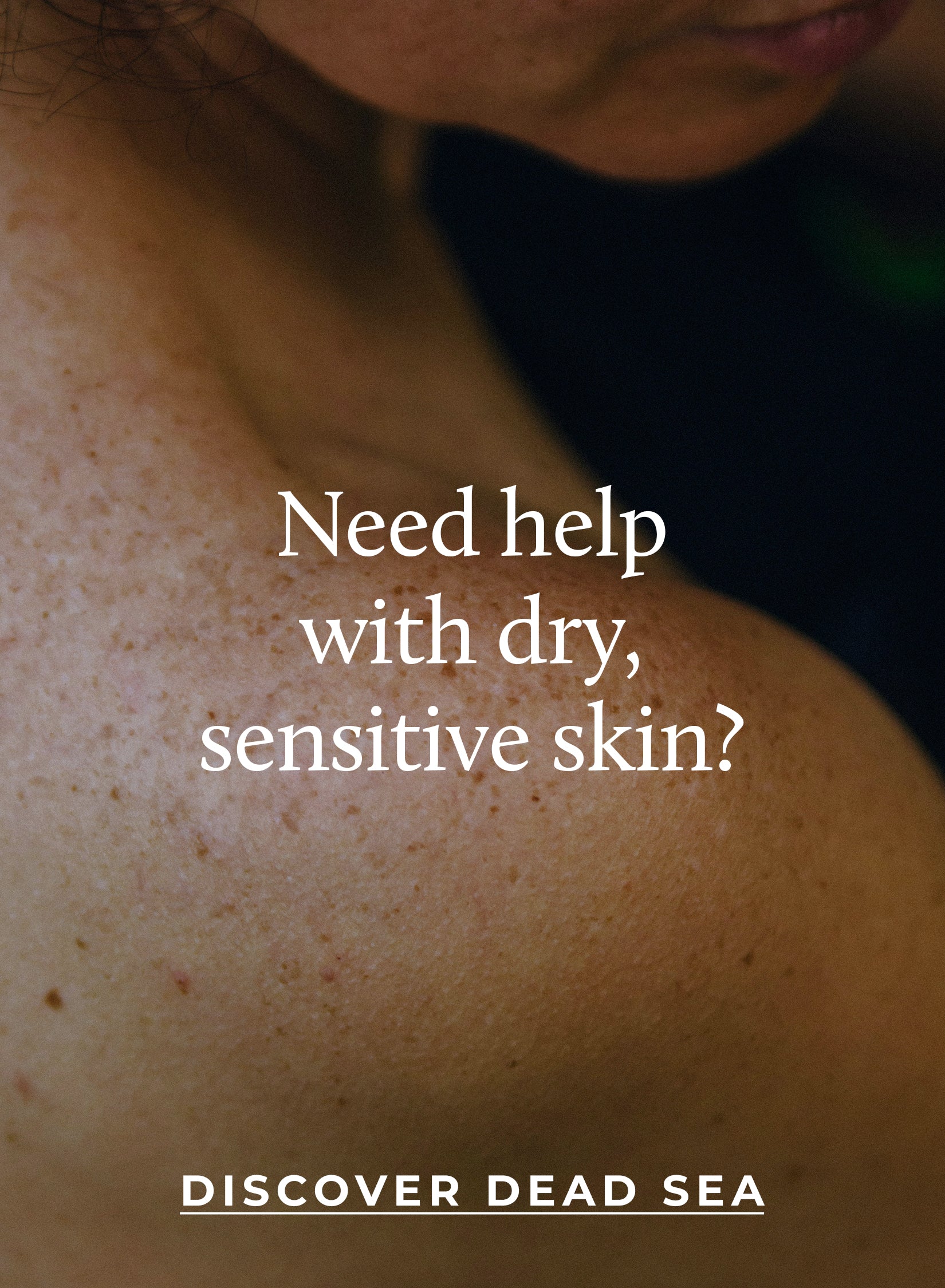
Dead Sea salts have an even longer track record, with bathers as far back as Ancient Egypt enjoying a soak to relieve the symptoms of eczema and psoriasis, as well as everyday skin dryness. So, if you’re after smooth, supple, hydrated skin, our natural Dead Sea salt is the right one to reach for.
Epsom salt
Great for: runners, athletes and people who are on their feet a lot
Helps to: relieve muscle soreness, aches and pains
Ingredients: Westlab Epsom Bath Salt is 100% pure mineral magnesium sulphate heptahydrate (magnesium, oxygen, sulphur and water)
Dead Sea salt
Great for: people with sensitive skin, eczema or psoriasis
Helps to: soothe dryness and itching, and improve skin hydration
Ingredients: Westlab Dead Sea Bath Salt is a 100% naturally sourced blend of over 20 minerals, including magnesium, potassium, calcium, bromide and sodium
What is Epsom bath salt?
Hear the word ‘salt’, and you likely think of sprinkling some on your chips, or biting into a fudgy salted caramel brownie. In fact, the word ‘salt’ covers a huge variety of chemical compounds. From helping cakes rise to making gunpowder go bang, there’s a salt for almost everything.
But back to Epsom salts.
Chemists call it magnesium sulphate, but the more common name comes from the Surrey town where, in the 1600s, a farmer discovered a mineral-rich spring. When his cattle refused to drink the bitter water, one of England’s earliest spa towns was born.
Visitors flocked to the area, drinking and bathing in the water to help relieve everything from constipation to muscle pain.
Ever since, Epsom salt has been used as a natural home remedy to help unwind tired minds, soothe aching muscles and get busy people back to their best. All with a little help from some warm water, peace and quiet.
These days, it’s perhaps most popular with athletes and runners. After a workout or run, a warm, magnesium sulphate bath can help sore muscles recover and recharge, ready for next time.
What is Dead Sea bath salt?
Dead Sea salt is such a complex mix of minerals that there’s no single chemical formula to describe it. It’s mainly made up of magnesium, calcium, potassium and bromide, but has traces of lots of other minerals too.
Thanks to this mix, it’s unlike any other sea salt on earth. Despite being ten times saltier than ordinary ocean water, Dead Sea water has about a third of the amount of sodium chloride (table salt), which typically makes up 85% of most seawater.
Instead, its high concentration of magnesium and other salts creates a salinity so dense that swimmers can simply float on the surface.
How is Dead Sea salt made?
Despite the name, the Dead Sea is actually a low-lying, landlocked lake bordered by Jordan, Israel and the West Bank.
With no outlet to an actual sea, the water that flows in from the River Jordan slowly evaporates. Over the course of three million years, this has left behind incredibly mineral-rich waters, from which Dead Sea salt is naturally harvested.
To extract the salt, water is channelled into shallow pools and left to evaporate in the sun. The crystals left behind are then sieved to remove impurities, ready to turn your next bath into a truly restorative soak.
Explore Westlab Dead Sea Salt >
The chemistry bit
While you’ll find magnesium in Dead Sea salt and Epsom salt, their individual make-up is different – which is why they have distinct uses.
Epsom Salt
• Magnesium sulphate heptahydrate (MgSO4·7H2O) is a mineral compound made up of magnesium, oxygen, sulphur and water
• Not at all like table salt, AKA sodium chloride (NaCl)
Dead Sea Salt
• A naturally occurring mix of over 20 minerals, including magnesium, calcium, potassium and bromide, with no single chemical formula
• Dead Sea salt contains around 36 times the magnesium of Mediterranean Sea salt
Decision time: Epsom salt or Dead Sea salt?
Which salt you reach for might change from day to day, depending on everything from your exercise schedule to the changing of the seasons.
Before you pour, take a glance at our guide:
Sensitive skin, that’s prone to flare-ups: Dead Sea salt
Dry or irritated skin that needs a hydration boost: Dead Sea salt
Sore muscles after exercise: Epsom salt
Busy mind that struggles to unwind: Epsom salt
Essentially, if you’ve got sensitive, itchy or dry skin, Dead Sea salt is probably best. If you need help easing aches and pains, reach for the Epsom salt. Or keep both to hand, so you can restore, renew and go again, whatever the day throws at you.
FAQs
How often should I use Epsom bath salt or Dead Sea salt?
How much should I put in the bath?
Can you use Epsom salt and Dead Sea salt together?
Does the bath have to be hot?
How long should I soak for?
Any tips for a relaxing bath ritual?
I’ve got sensitive skin – which bath salt is best for me?
Can children use Epsom salt or Dead Sea salt?
Where does Westlab source its Epsom Bath Salt and Dead Sea Salt?
Can you absorb magnesium through your skin?
Where to find us...


